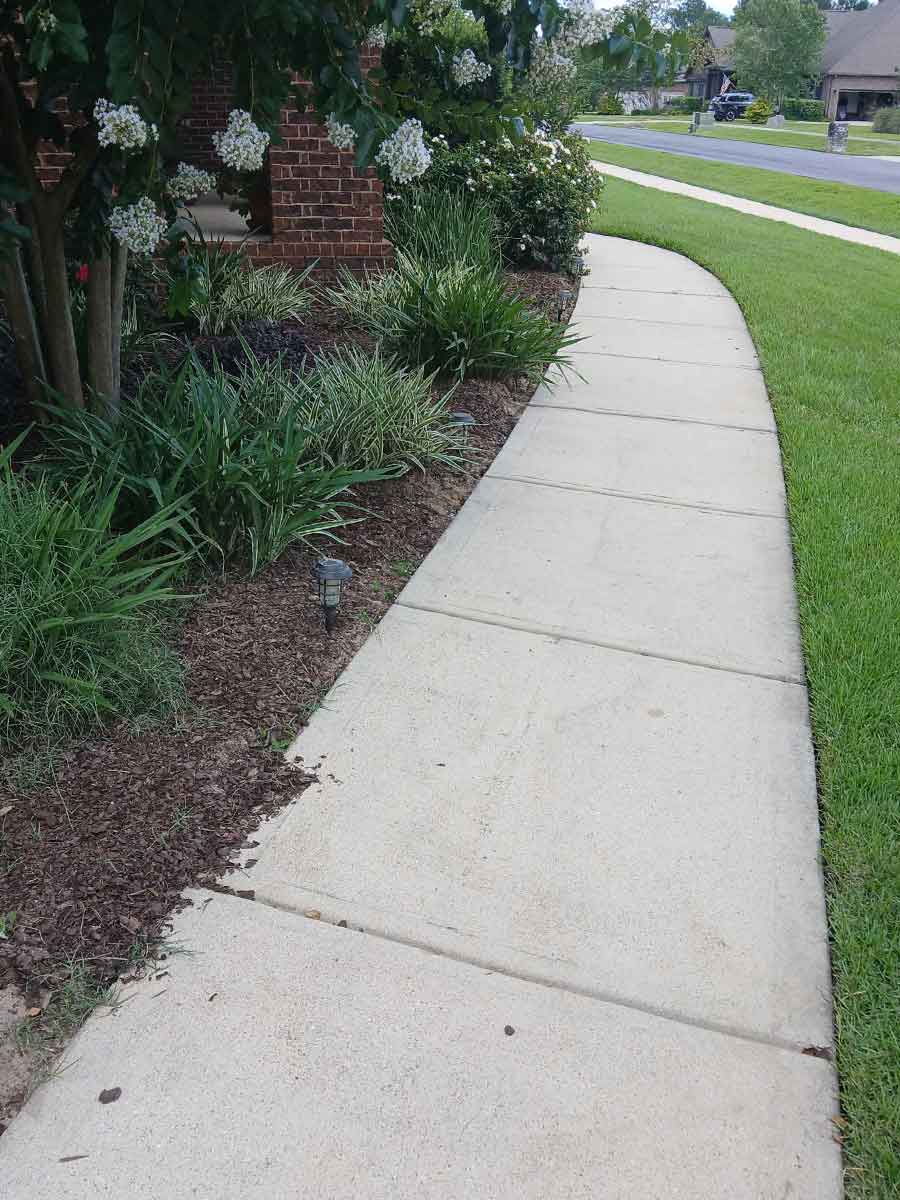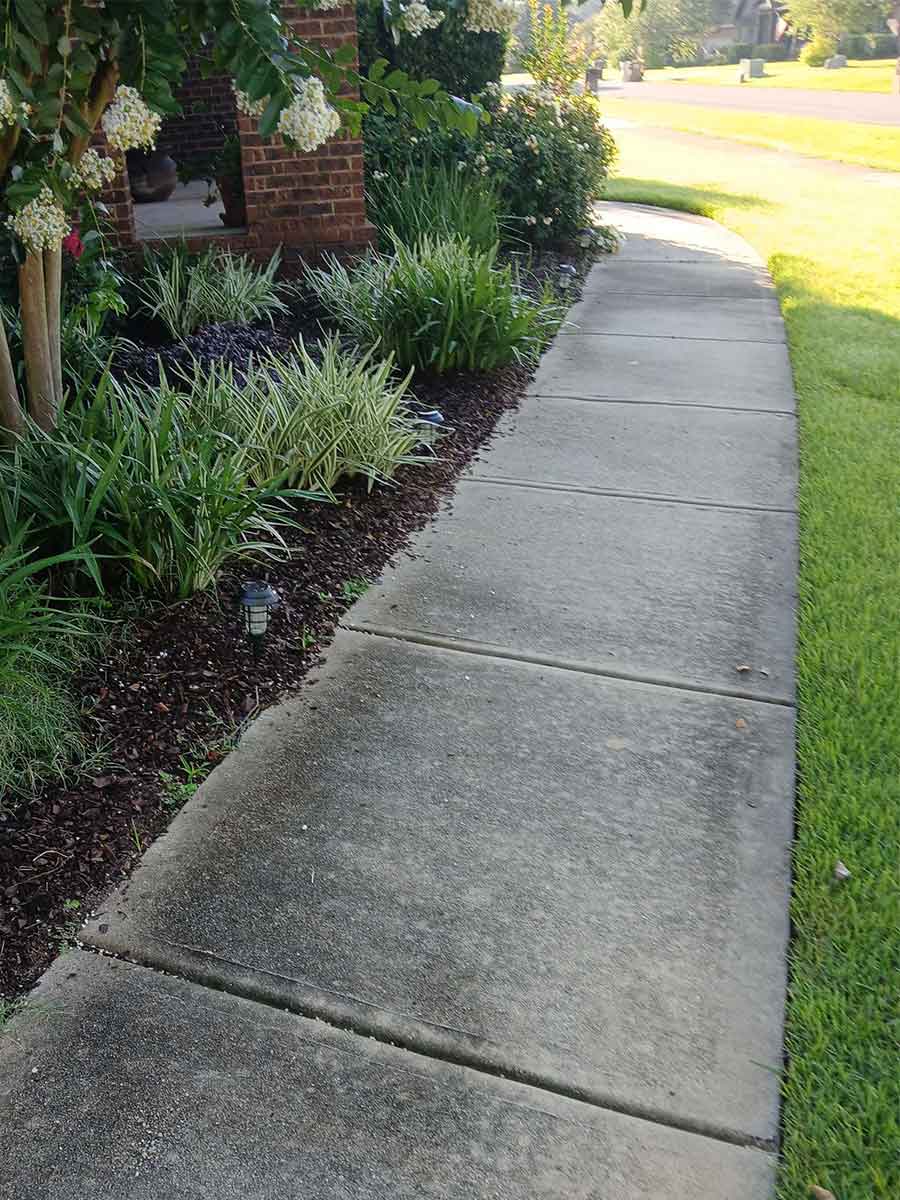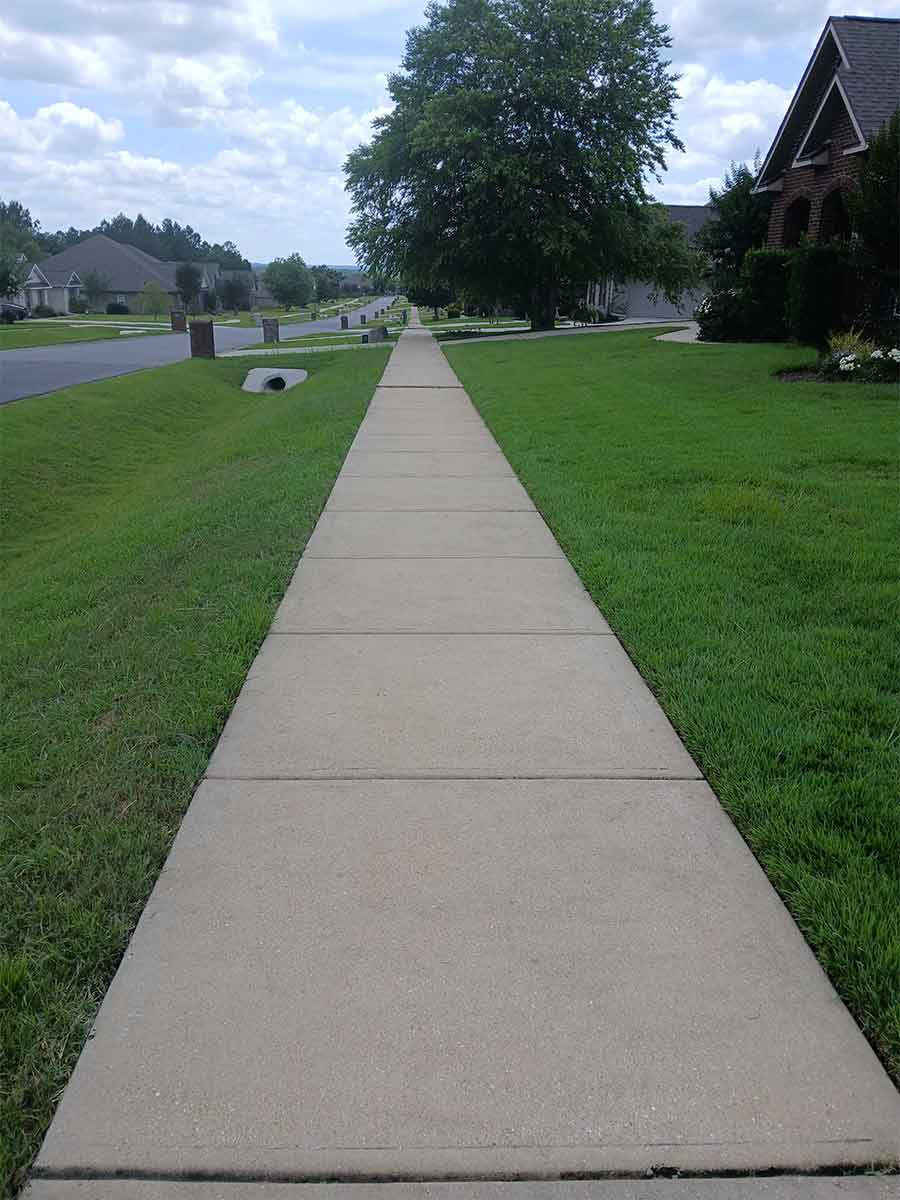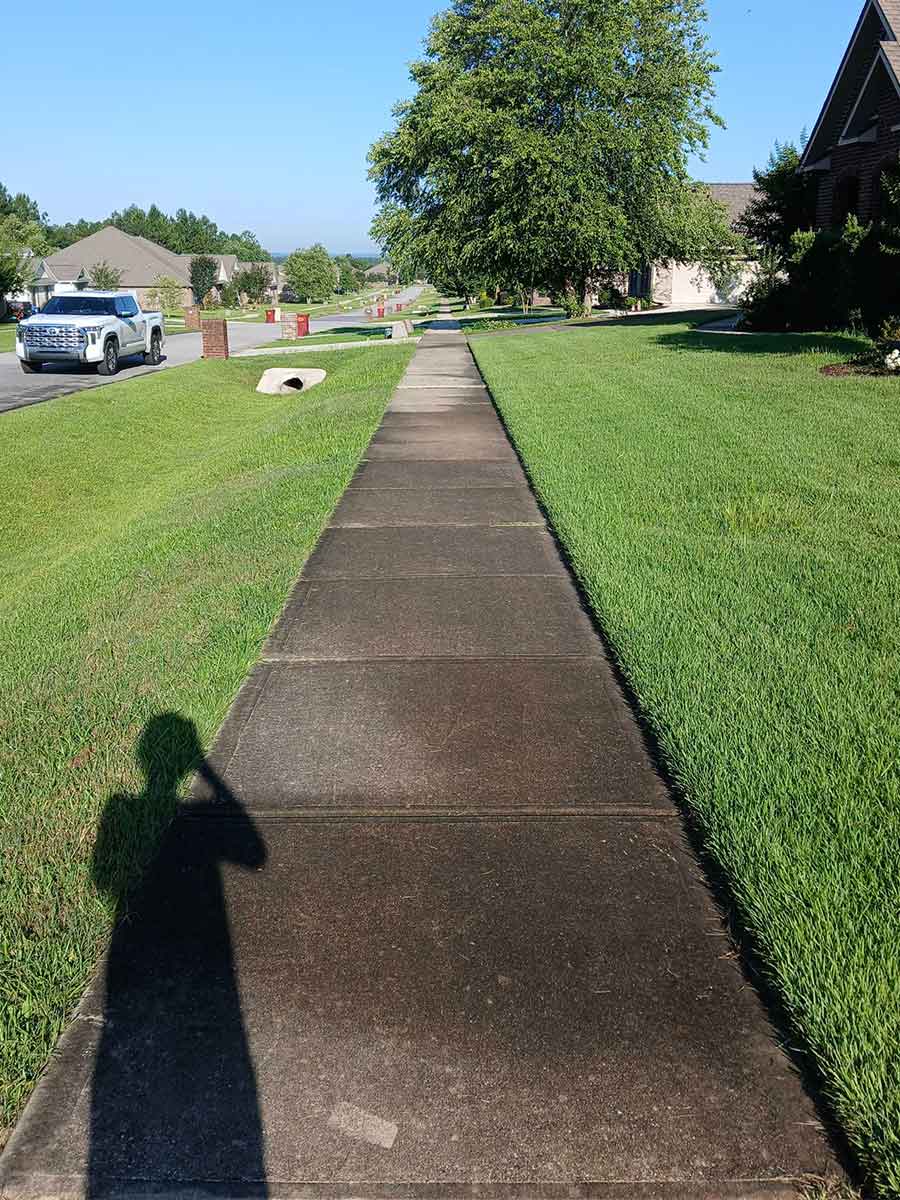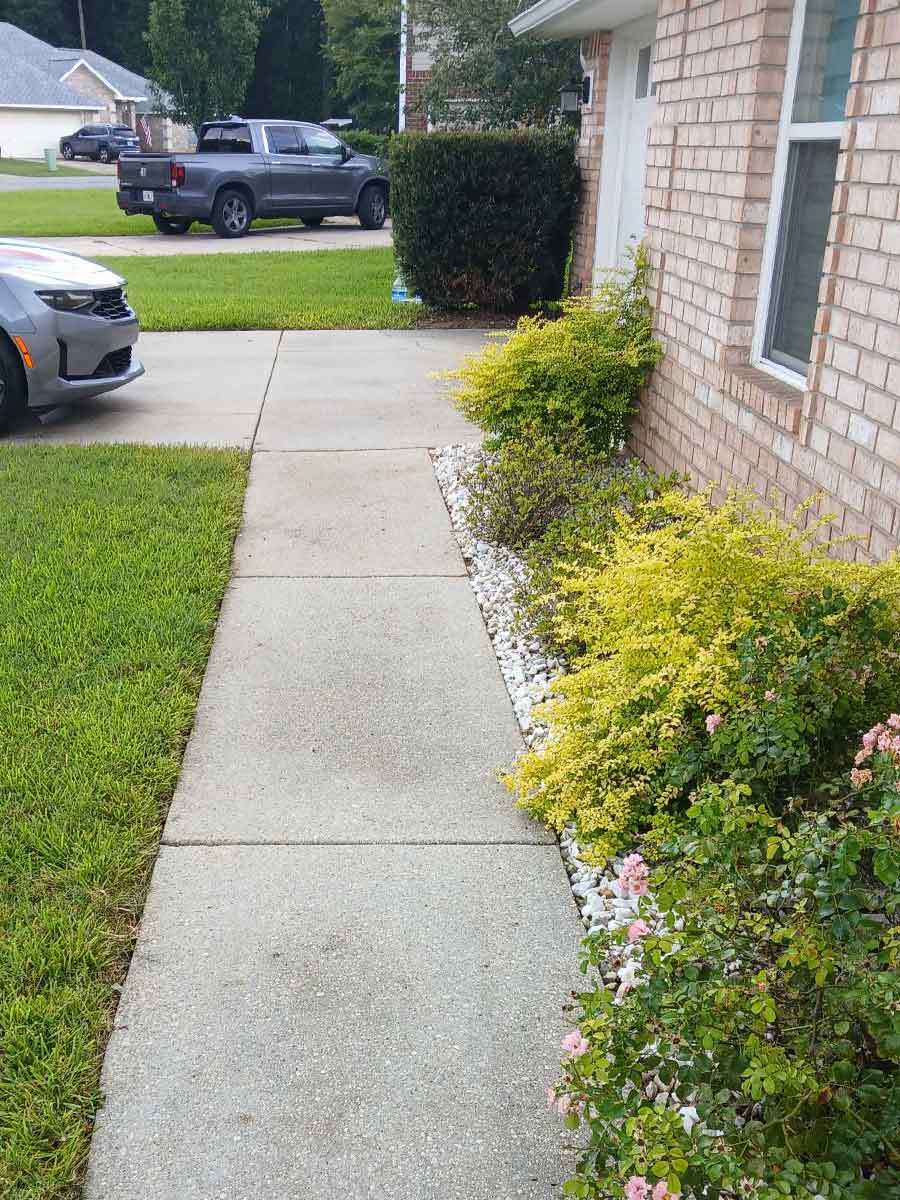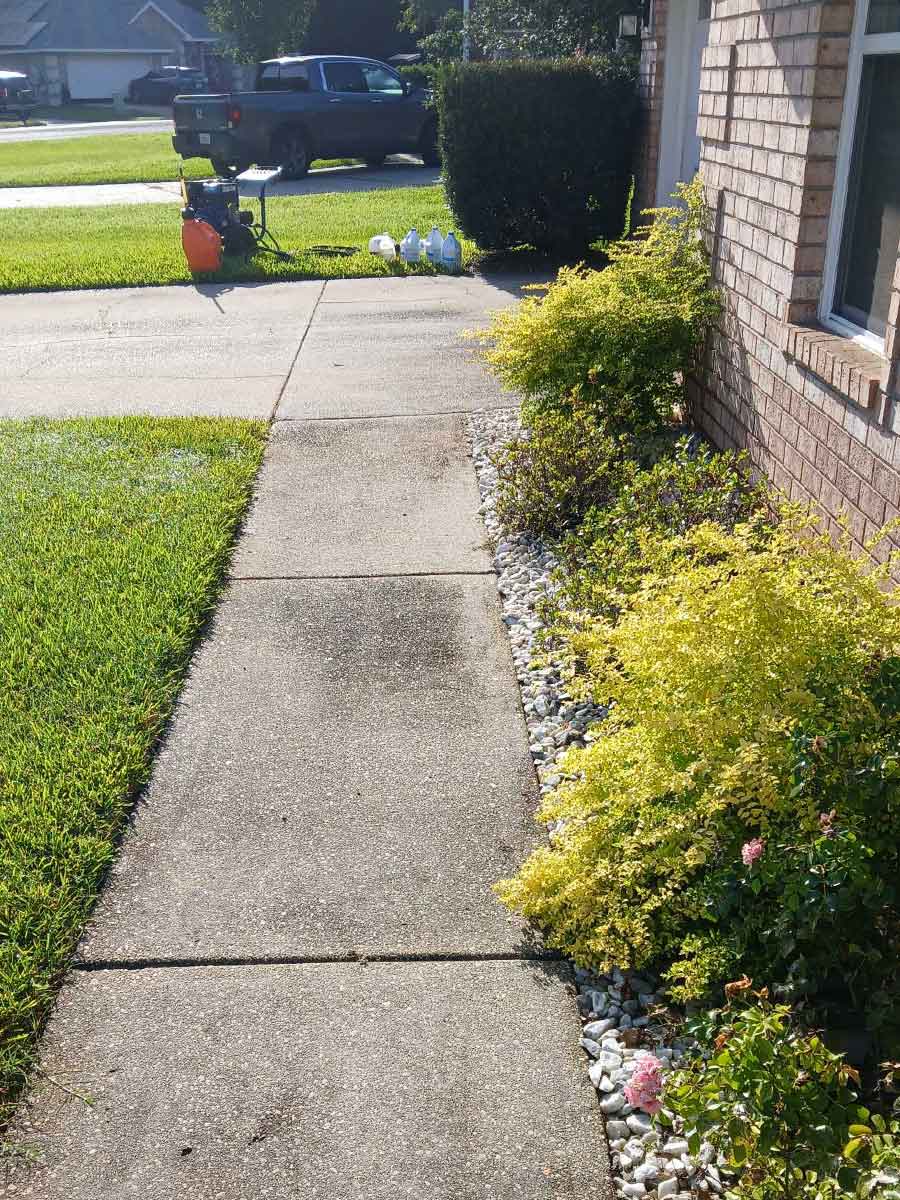
The surface people actually walk on
Driveways get the attention because they are big and visible from the street. The sidewalk is the one your family, your guests and the delivery driver actually put their feet on, and on the Gulf Coast it is usually in worse condition than the driveway beside it.
There is a reason for that. Walkways are narrower, they sit closer to planting beds and irrigation, and they are far more likely to run along the shaded side of a house. Shade plus damp is exactly what algae needs, so the path to your front door often goes green a year or two before the open driveway does.
Slippery is a safety problem, not a looks problem
On a driveway, algae is unattractive. On a walkway it is a fall risk, and it is the reason we would tell anyone not to leave it.
The awkward part is that it rarely looks dangerous. Algae grows as a smooth, very thin film rather than as visible dirt, so on light-colored concrete you often cannot see it at all. What it does is fill in the surface texture that was giving you grip, then hold a layer of water on top of itself. Smooth surface plus a film of water is the definition of slick.
The test takes ten seconds: walk it barefoot after rain. Wet but grippy is a clean walkway. Slick or faintly soapy is growth, and no amount of rinsing will shift it.
What we clean
- Front walkways and entry paths, including the steps and landing where people slow down
- Public sidewalk frontage along the street side of a property
- Side and back paths, usually the worst of the lot because they see the least sun
- Garden and utility paths running to sheds, gates and AC units
- HOA common-area walkways and shared paths between buildings
- Storefront frontage for small commercial properties
How it is actually done
Walkways get cleaned the same way concrete driveways do, with a rotary surface cleaner rather than a wand. The wand is what produces the striped, zebra-looking result you see on a lot of DIY jobs, because a narrow tip cleans in overlapping lines. A surface cleaner spreads the pressure evenly across a wide head and takes the whole path down uniformly.
The other half is chemistry. Blasting a green walkway with water alone removes what you can see and leaves the growth rooted in the pores of the concrete, so in Gulf Coast humidity it is back within weeks. A proper cleaning solution with enough dwell time kills it properly, which is the difference between a walkway that stays clean for a season and one that stays clean for a fortnight.
Edges and expansion joints get attention too. A path that is clean in the middle and still dark along both edges looks half done, and the edges are where growth creeps back from.
HOAs, storefronts and shared walkways
Common-area concrete is the same work as a residential path, just more of it, and the priorities shift slightly. Slip liability matters more when the people walking it are residents or customers rather than family, and appearance matters more when it is the first thing anyone sees arriving at a property.
Pricing works the same way, on square footage, and larger runs of continuous concrete are more efficient per foot than a short residential path. Where foot traffic makes it awkward, work can be scheduled early or outside opening hours. If you manage a property and want a number, send the approximate dimensions and we will quote from that.
Frequently asked questions
How much does sidewalk cleaning cost?
Sidewalks are priced with driveways and other flatwork, typically $100 to $250 for a residential property. Most of what any job costs is the setup, so adding the front walkway to a driveway that is already being cleaned costs far less than booking it on its own. Our 2026 price guide has the full local ranges.
Will cleaning make the sidewalk more slippery?
The opposite. The slipperiness comes from the algae film filling in the surface texture. Removing it gives you back the grip the concrete had when it was laid. A walkway is at its safest just after it has been properly cleaned.
How often should a walkway be cleaned?
Once a year suits most properties here. Paths that are heavily shaded, sit near irrigation, or run along the damp side of a house often want attention sooner, because they simply never get a chance to dry out.
Can you do just the sidewalk?
Yes, though it is rarely the best value. Because setup is most of the cost, a walkway on its own costs nearly as much as a walkway plus the driveway it connects to. We will tell you that up front rather than after.
Sidewalk cleaning across the Gulf Coast
We clean walkways at homes and small commercial properties throughout Milton, Pace, Pensacola and Gulf Breeze. Most jobs pair a walkway with the driveway and concrete it runs off, which is the cheapest way to do both.